Day 2: July 9
1.
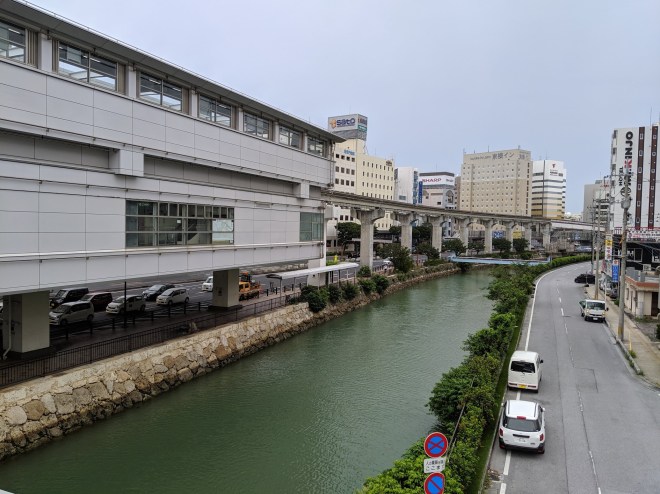
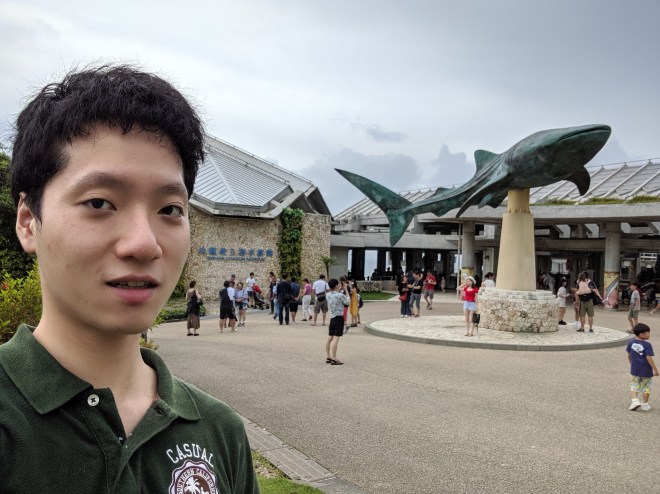
As yesterday I asked a staff of the monorail station, one went to the Naha Bus Terminal, at Asahibashi (旭橋), to get on the bus “117” to the Aquarium. It was a good 2-hour drive to the Aquarium; I did not know it was that far. Though having slept little, I could not fall asleep on the bumpy highway. By about Nago City, the bus came out of weeds and tombs, and followed the seashore. I had plenty time watching in solitude the sea, which extended to the unfathomable skyline in loneliness, and brooding about what misery the mankind was in, and completing the boring writing that this essay was. One got off on the “Memorial park” (記念公園前), which was exactly the entrance of the Ocean Expo Park, where the Aquarium was. It was moderately hot, but very humid in the air. Following the brochures, one walked for some 5 minutes to the right to get into the churaumi-suizokukan (美ら海水族館), or the “Beautiful Aquarium”. There was a Shark Statue in front of the door, which I would soon realize what it stand for.
2.
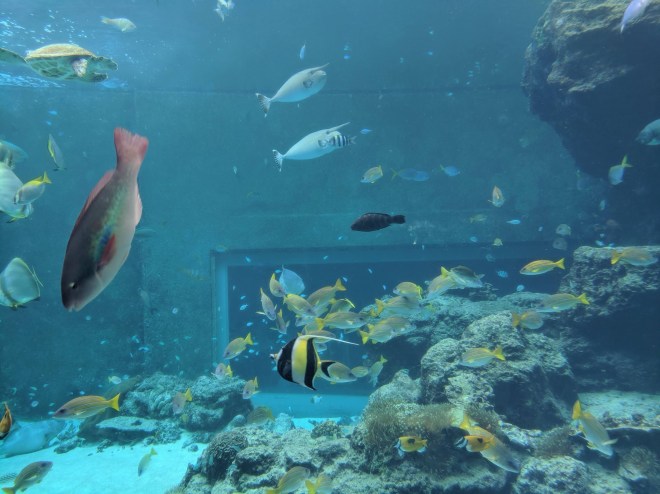
With the 1850 yen ticket, one got into the building crowded with people, many of whom were speaking Mandarin, and were downright excited kids. In the first room one may touch the sea stars and sea urchins, if done gently. And there was a big fish tank made with magnifying glass-wall, so that a variety of fish could be closely examined.
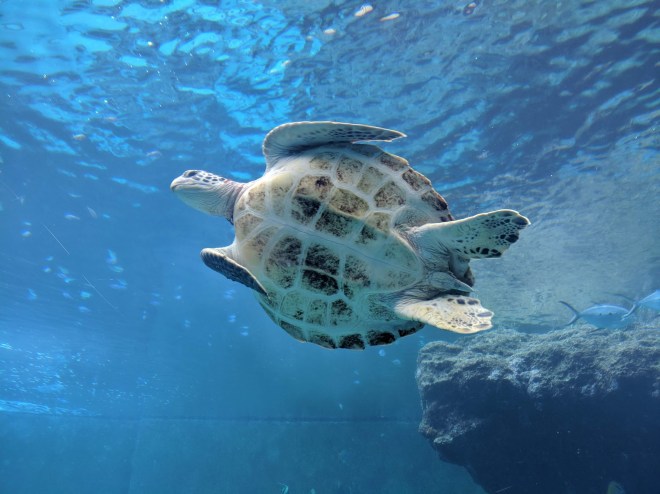
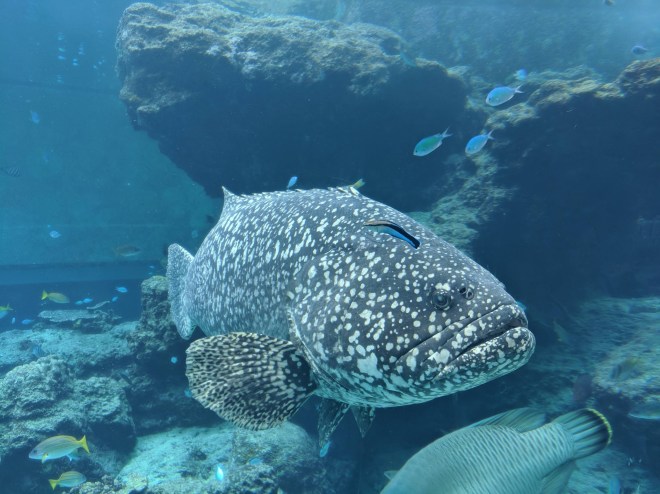
A swirling school of clownfish (people exclaiming “Nemo”, in reference of Finding Nemo), a really huge and scary grey sweetlips, a trumpetfish like a stick, and sea turtles that whipped its limbs to surface upwards — and a myriad of creatures I could not name. What, to you, now read like meaningless encyclopedia entries had, at that moment, turned into vivid bone and flesh in front of me. And how alienated have we been from the real nature that has always encircled us? We are not far from thinking the fish photo on the menu is a close likeness, especially those in a sushi shop.
3.
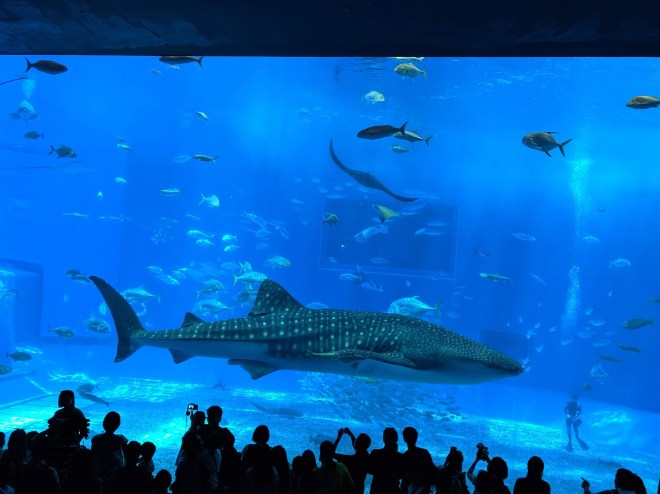
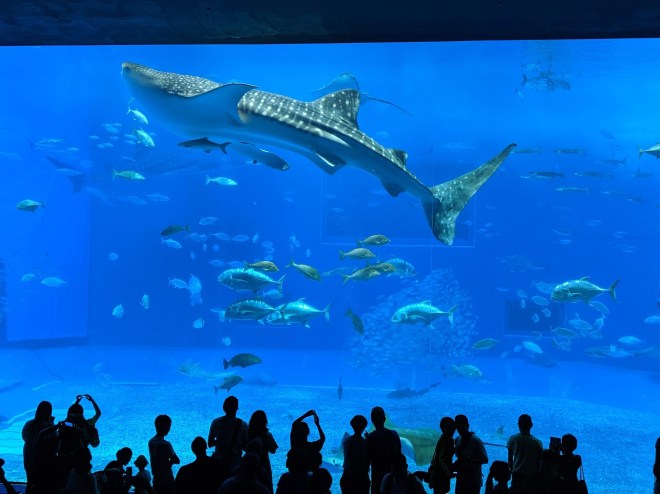
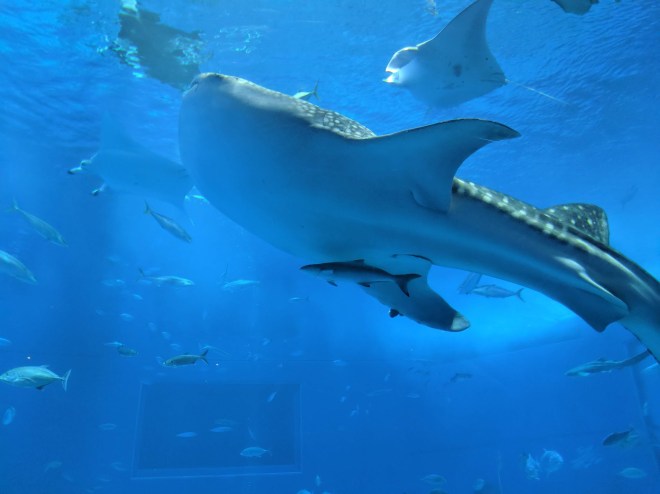
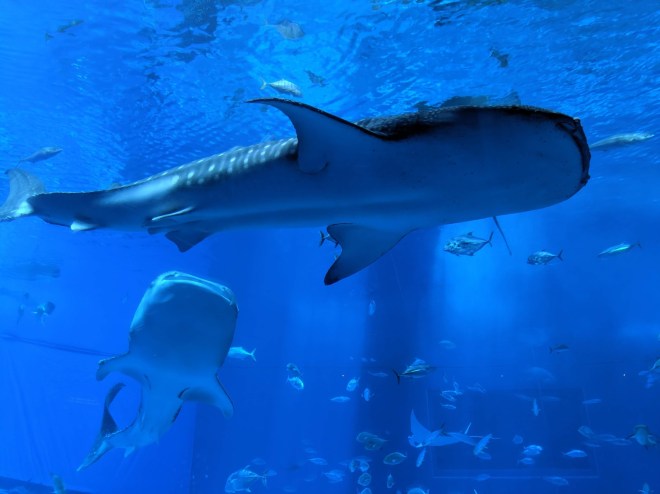
When I thought that that was it, I was wrong; what was the next room was nothing less than what I had seen. There emerged a larger fish tank. A ray with funnily protruding eyes swam, pressing the glass so it looked even closer to me. And a still larger, indeed incredibly large, fish, as wide as several adult’s height, swam casually across the curved glass wall, near the surface of water. Everyone exclaimed in earnest awe, in respective language. It was a whale shark. Now I just laughed at myself for just having considered those sea basses to be large. Furthermore, a dented canopy enabled people to directly look, under it, the whale sharks from below, and to examine its fins and abdomen closely, which could be frightening. And at 1 and half, a diver went into the tank to shot, in real-time, video of the sea creatures, and the scene was showed on a screen.

4.
Not in their genuine home, they must have required great care by the staff. We were still not sure what they eat, the written notes said. The staff even had the female whale sharks taken the ultrasound scan — with help by Taiwanese researchers — when it was about to give birth to baby sharks. Nevertheless, they must find the tank (or perhaps the bowl?) to be, unfortunately, depressingly small, barely possible to let them turn around as recklessly as in the ocean, though the tank has been recognized officially as one of the largest in the world. What must the whale sharks have been going in the sea? They were to plunge merrily, I guessed, once they felt like it, towards the deep of sea, into pure blackness, which the mankind perceived to be void, and again to rise onto the surface of water in no time.
5.
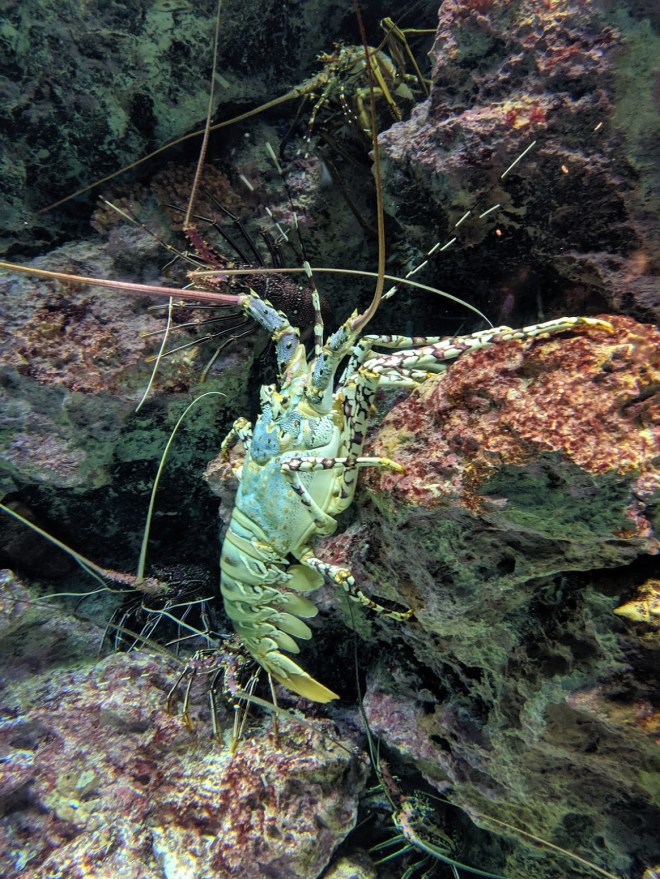
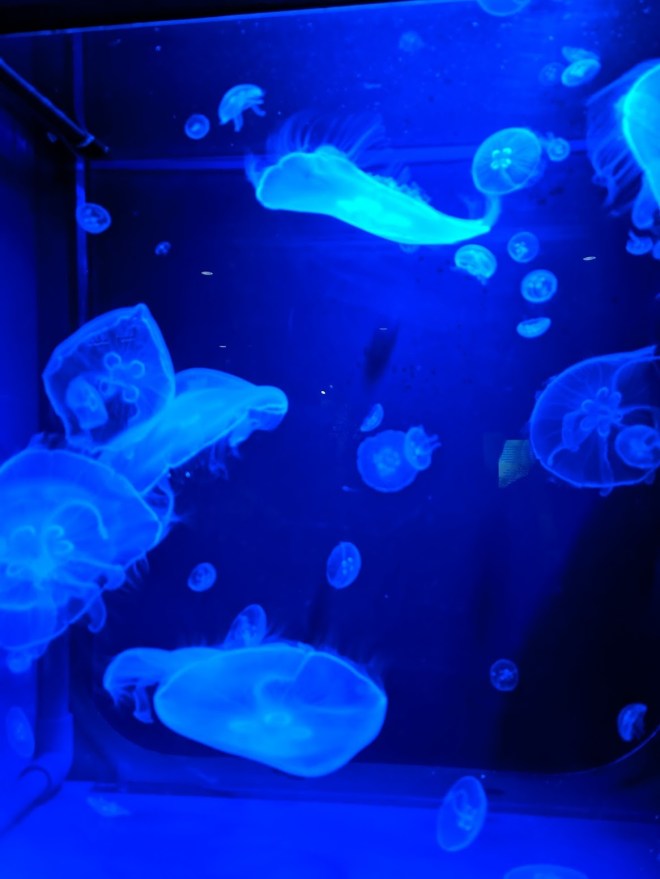
Beside the main fish tank, there were miscellaneous tanks that showed deep sea creatures. That was made possible by specially designed device that exert extra pressure, as explained on a plaque. The lobsters were big as an adult’s chest. The jellyfish, glowing under the ultraviolet light, must be eating something eerily by wielding many of its tentacles. And the flashlightfish, in the darkness, could only be recognized by with its fluorescent stripe. In the souvenir store I bought a shirt which the iconic whale shark was painted on, in the hope that the trifle amount of money would help the whale shark keep living at its ease.

6.
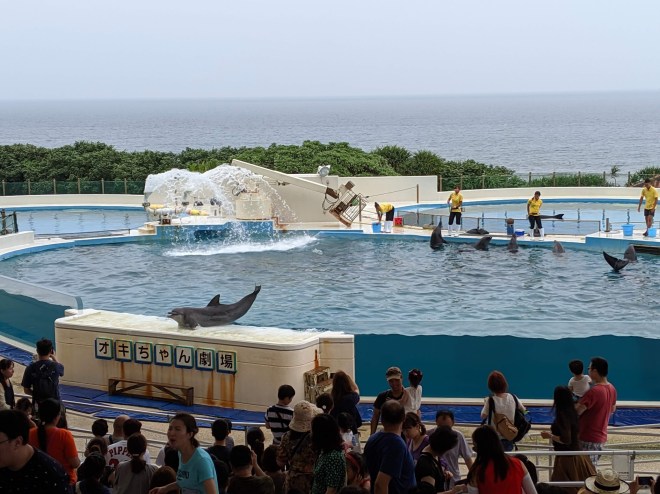
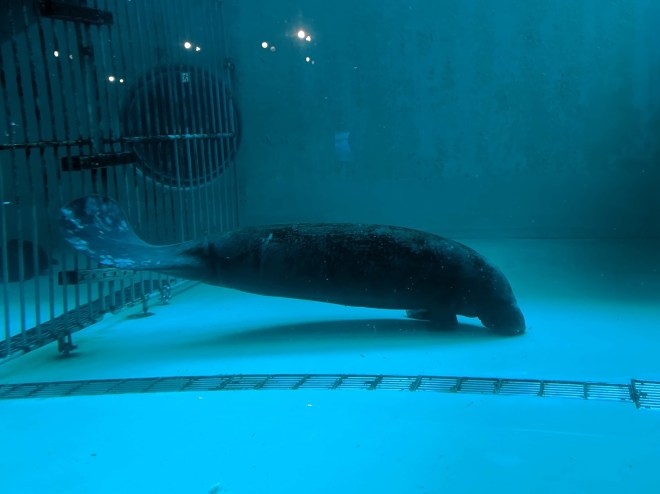
Thinking it was possible to go into the aquarium again, I felt like that was enough, and followed my whim to go to the plant gardens as promised on the brochure. Beside the Aquarium building, there were several pools for manatees, and several for sea turtles. A dolphin show, the moment I passed by, had just ended. Southwards there were more butterflies and bees, and tropical plants with prickling leaves, and crows’ caw could be heard. I was a little disappointed as there seemed to be no plant garden arranged with the same quality as the Aquarium was, or perhaps they were a reasonable distance away. But the bus schedule was awkward: The last one was to arrive here at 17:15, and it was now about 3 and half. Fearing that the bus time might be unpredictable, I decided, by almost at 4 o’clock, that I go back to wait for the returning bus. When I did, it soon came and I got on, calling it a day.
7.
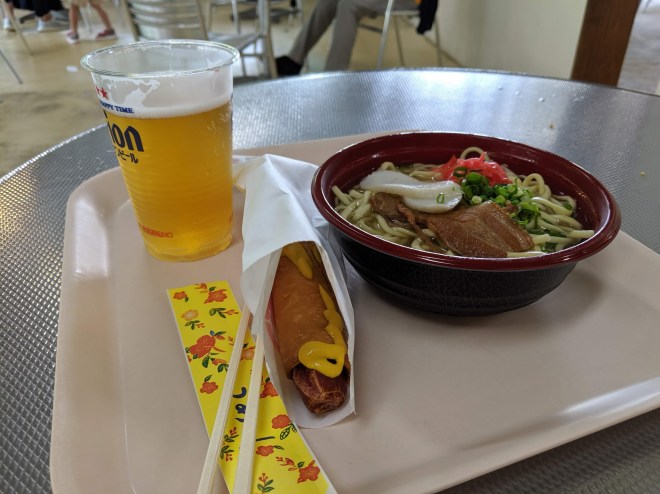
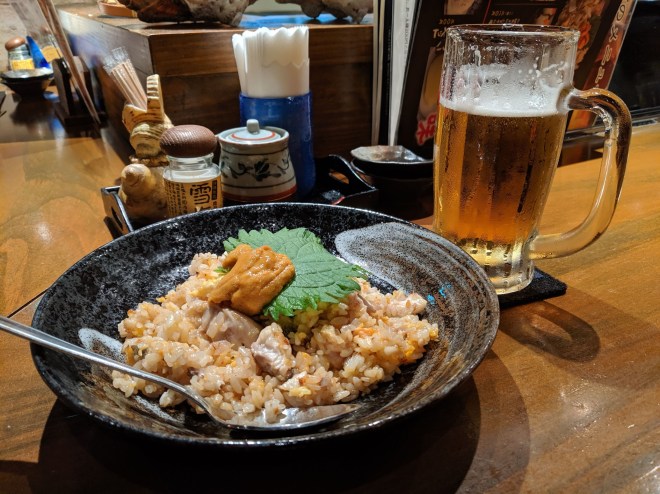
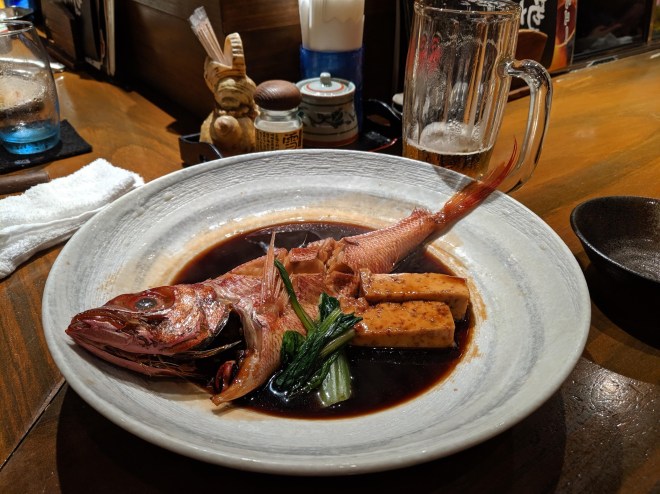
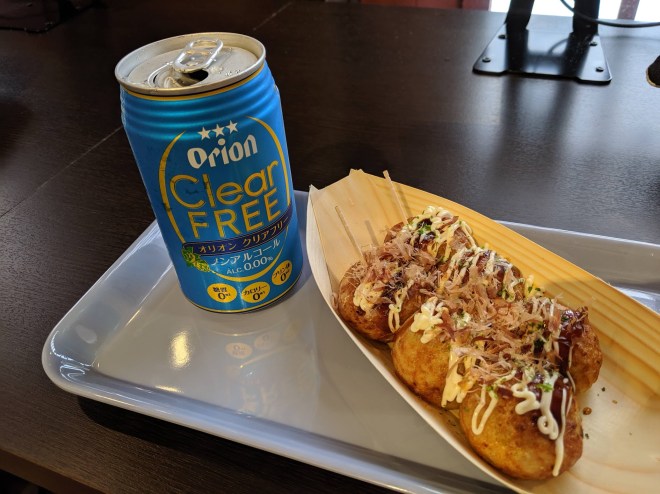
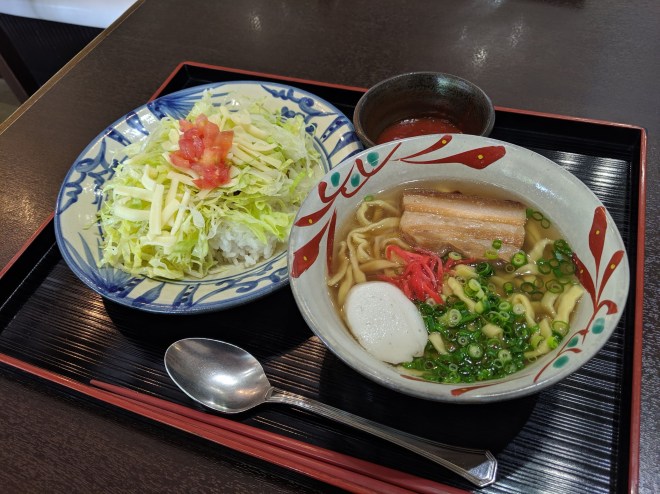
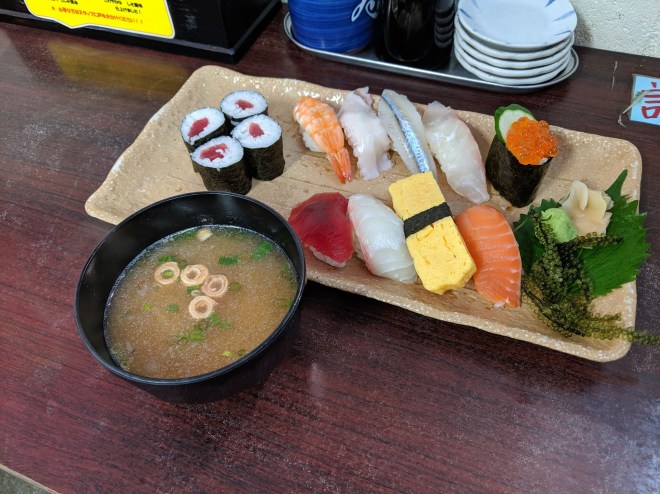
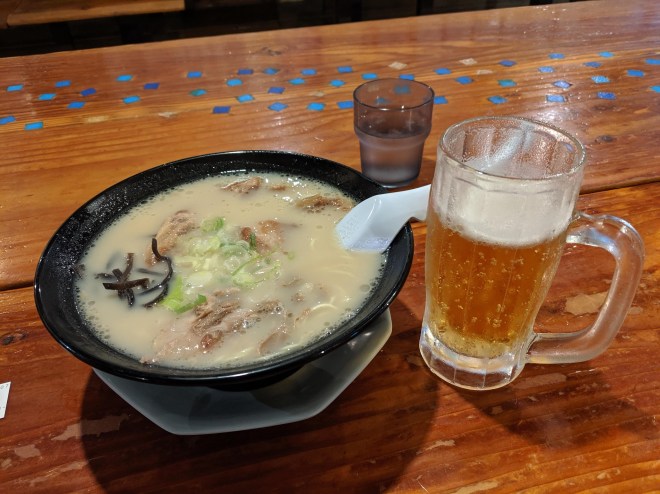
By now I had had nothing impressive, except an Onigiri bought in the morning by the Naha terminal station, and a shabby Soba-noodle in a stand by the Aquarium, so I was really hungry. After going back to the hotel and rested for a moment, I found it was already 8 o’clock, and what was still opening might only be Izakaya-bars. Speaking of those, it was curious that the area, reading Maejima (前島) on the map, seemed right at the center of the aggregation of Izakaya-bars: there were more than a dozen within walking distance. I crossed a street to go into the nearest one, “海のちんぼらぁ”, judging from the fact that it was marked 4-star on Google Maps. The staff welcomed me to a low wooden seat, near the bar adorned with seashells; there, through the glass window of the open-kitchen, fish slices could be seen, on which diligently-working cooks worked in front of me. I ordered a dish of rice fried with fish shreds and served with sea urchin. Orion Beer could be refilled free, as seemed to be the norm. I felt a tad estranged by typing on my laptop alone here, for, as I could tell from the surrounding, the very place served usually for gatherings of business people and friends alike. I ordered another soy-sauce-stewed fish, and it tasted certainly like one of the best stewed fish I ever had had. The fish was cooked just to the right point, contrasted in taste by the bitter but smooth-flavored Orion beer. I would sign in my Google account to rate a five-star for the inconspicuous bar — I told the cook. But the fish alone cost some 1400 yen, and this number ought to be forgotten.



 Sketchbook