Day 4: July 11
1.
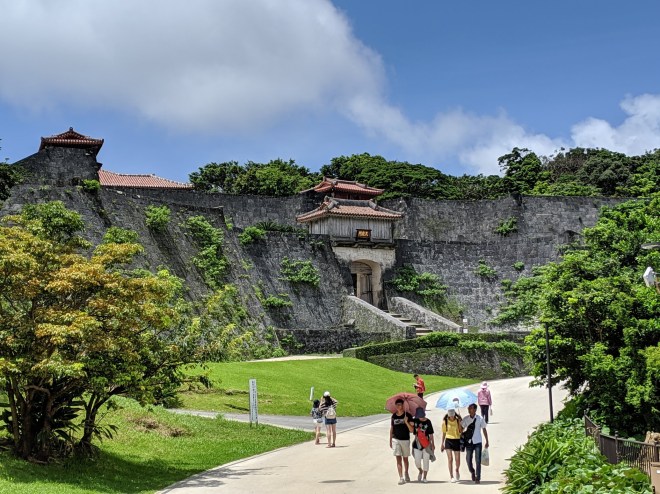
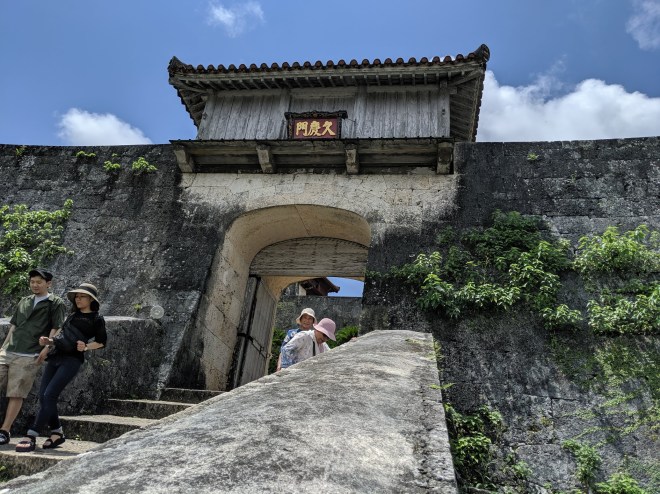
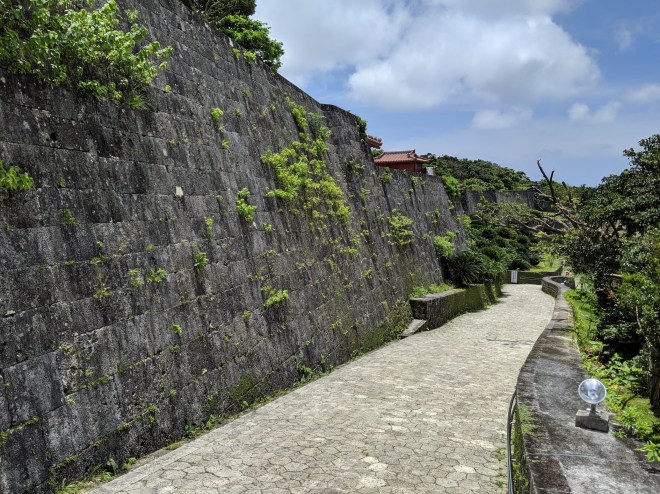
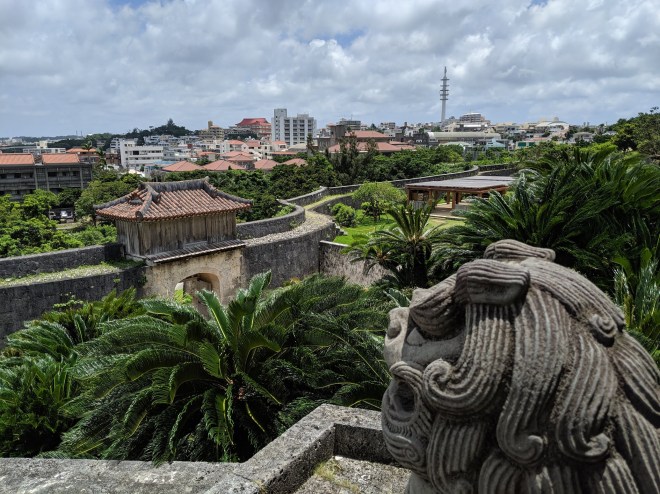
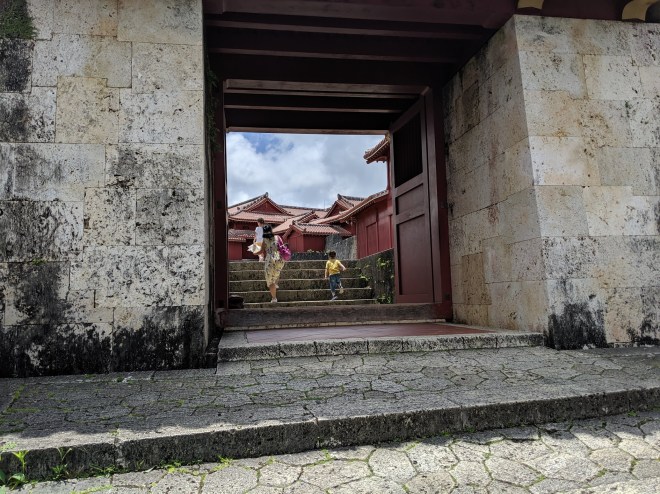
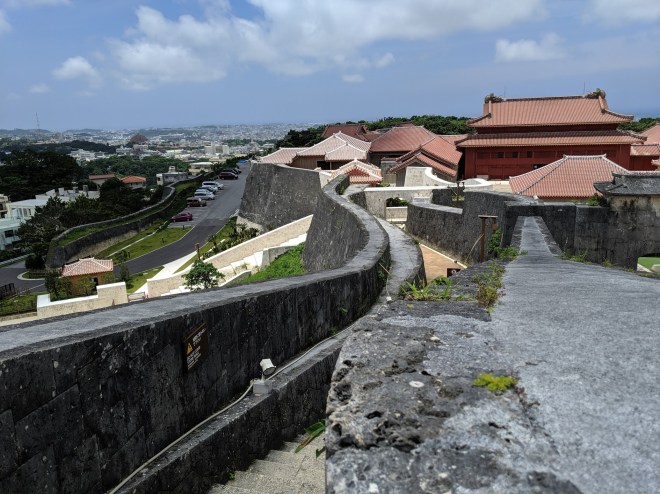
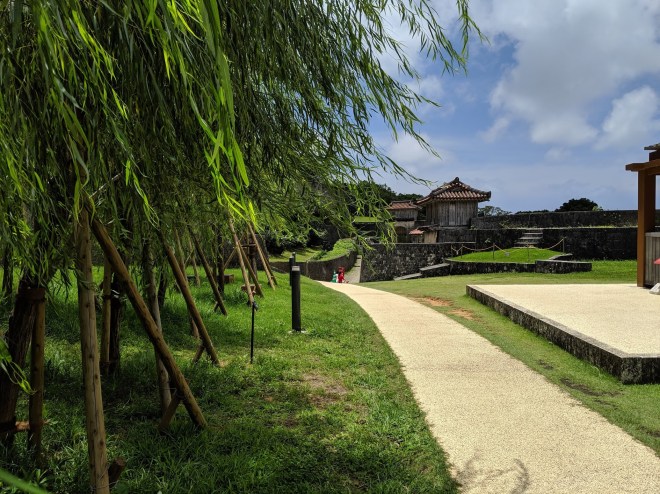
By the monorail, it took about 10 minutes to go from the Miebashi Station to the Shuri Station (首里駅), and then one walked for another 10 minute to the Shuri Castle (首里城). It was free to enter the park of World Heritage, including going into part of the castle. The route of visit was well planned, and one followed the arrow on the pervasive signs to go into Kankaimon-gate (歓会門) first. The stone walls that surrounded the castle, and the stairsteps too, were built of hexagon stone bricks, which were polished very evenly and were tightly in contact with each other. I wondered how they cut the stone bricks so precisely. The stone, except for the fern and grass in the fissure, did not appear to be so old, but definitely appeared genuine and not restored.
2.
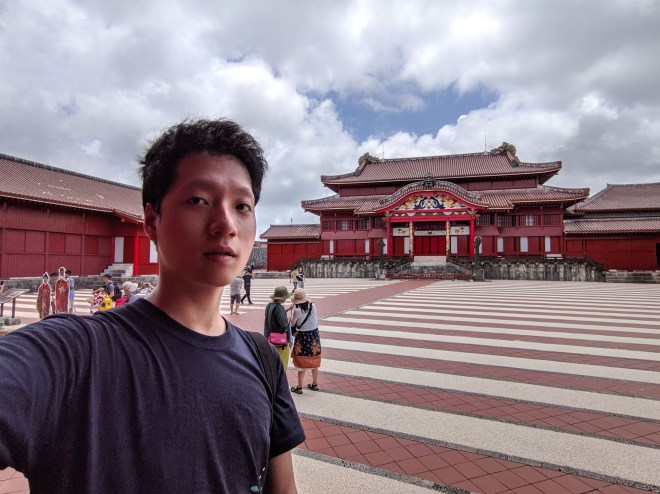
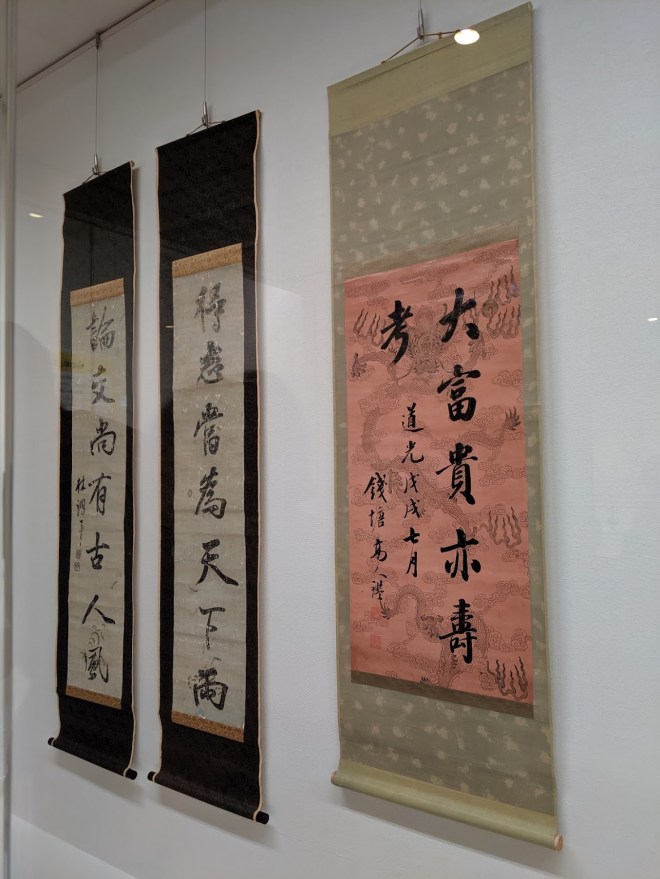
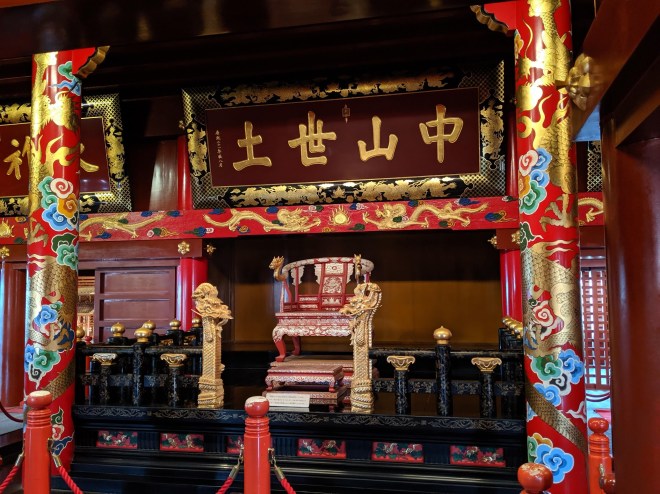
There was a gate, inside which one had to pay to visit. I was given a plastic bag (which appeared strange to me at first), and was asked to take off my shoes. Along the planned route of visit, one can see artifacts, for example a big bell’s mold, peony-carved bricks, dragon-shaped pillow remnant, the Ryukyu kings’ crown and seal, and a series of portraits of kings, all of them in the Mandarin costume. From what’s left here, the Ryukyu kings probably wrote calligraphy as skillfully as the Qing emperors. And there were the tatami-mats where the king must have sat, and looked down his people proudly. To call servants in another room, they pulled a bell, which seemed intriguing to us. These were all very interesting, but I found the stone-wall-building artistry to be most impressive above all.
3.
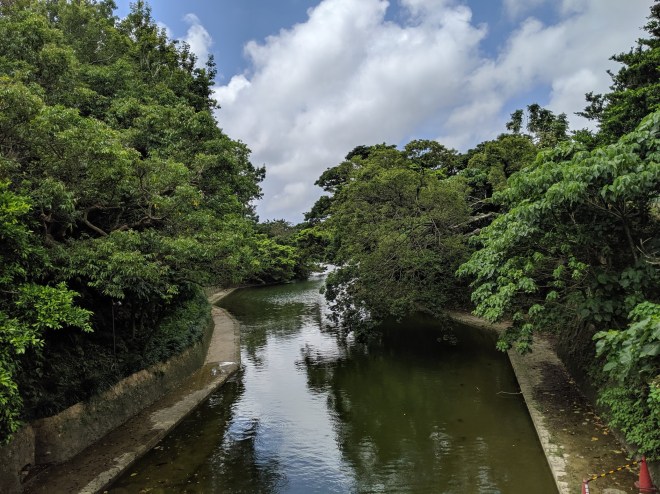
At the highest point there was an observation. One saw the China sea, the Tomari port I had been, the buildings that Naha city was, and the red roof-tiles of the palace that I was just moments ago. I left the castle, and found a wood pavilion at the center of the lake, which would have been a nice resting place if it had not been so hot. A sign explained that, in WWII, intense battles took place here, and American seized Okinawa, causing most ruin destroyed. While the Ryukyu Kingdom had once dominated the island, and in its prime vowed to serve as the port of “thousands of countries”, all that now left was a broken castle.
4.
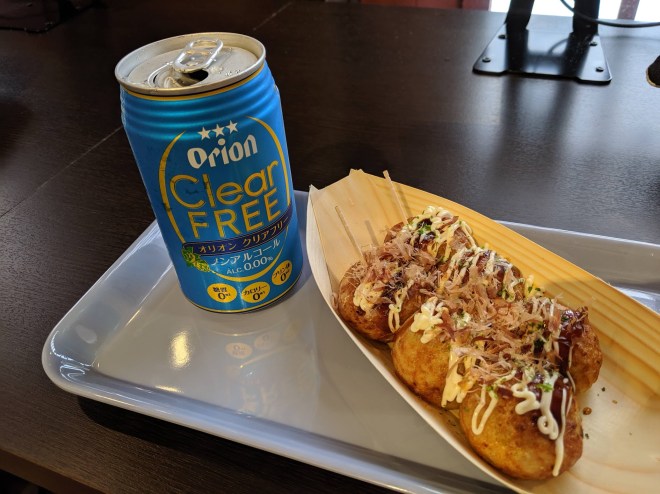
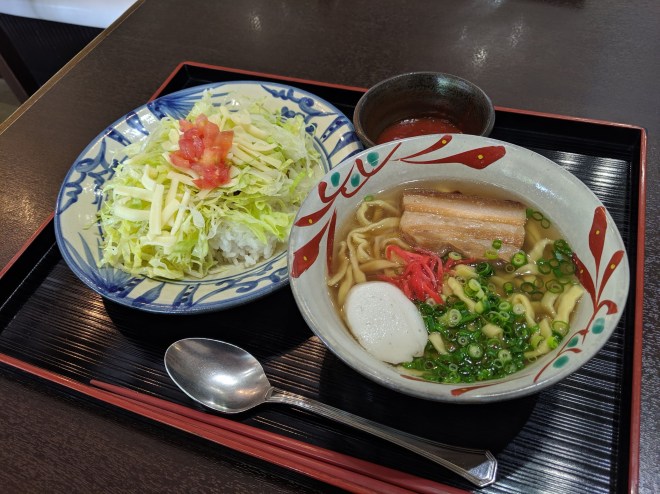
The sentiment was all very noble, but I was hungry again. Close to the castle a restaurant called Suimui-kan (首里杜館) seemed to be the only decent place to eat. I ordered a soba-noodle, similar to what I had had in the America Village. The stewed pork often contained cartilage and fat, which I didn’t like. By the way, on the way back I helped a Thai woman — who lost her way back, could not speak English, and could not access Wifi — go to a police station. Though it would be quite a while before the flight was to took off, I chose to get to the Naha airport earlier to pick some Aloha shirts hard to see in Taiwan (or are they?).

 Sketchbook